
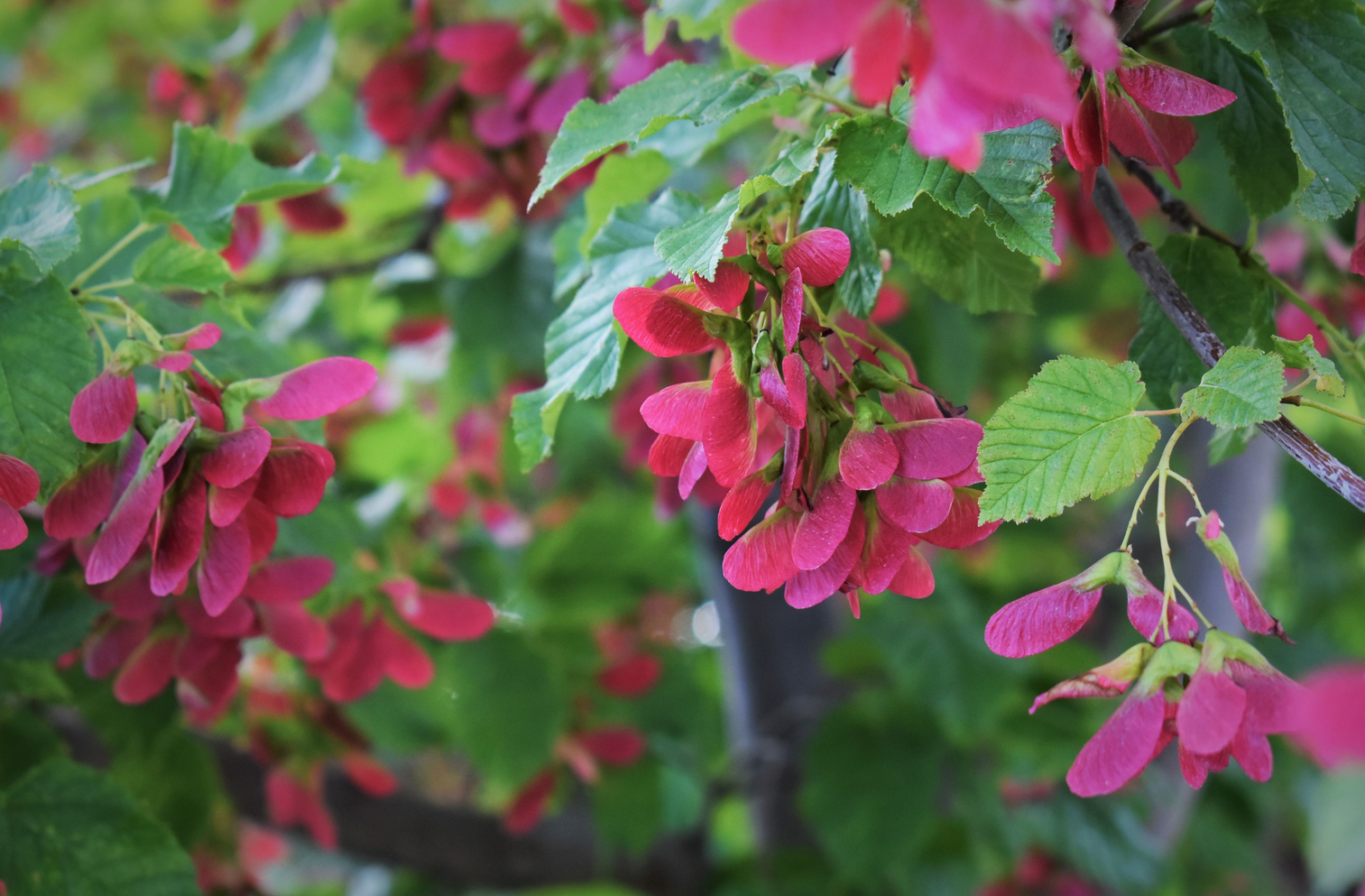
Hot Wings Tatarian Maple is a superior small ornamental tree discovered in Colorado but destined for distribution throughout the country in USDA Zones 4 through 10. It appeared as a chance-seedling found growing in the production fields of Fort Collins Wholesale Nursery at Fort Collins, CO. This particular tree stood out from all the other Tatarian maples for six weeks every summer with its brilliant scarlet-red samaras, what some folks call helicopters because of the way they spin around when falling from the tree. These samaras are so bright red that when standing out against the rich green foliage it gives the appearance of being in bloom. In the spring, clusters of yellow-white flowers cover the tree after the leaves appear. With the arrival of cooler temperatures in fall the foliage turns to orange red on the outside of the canopy and bright yellow inside for quite a stunning effect. With strong branching, cold and heat resistance, drought tolerance when established, and growing 15 to 18 feet tall and equally as wide if left to grow unpruned, Hot Wings is indeed a superior and magnificent tree that deserves a spot in every landscape.
Trees & Shrubs
Flowering Trees
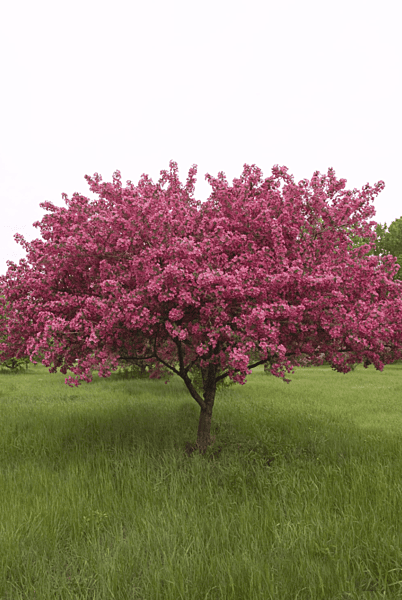
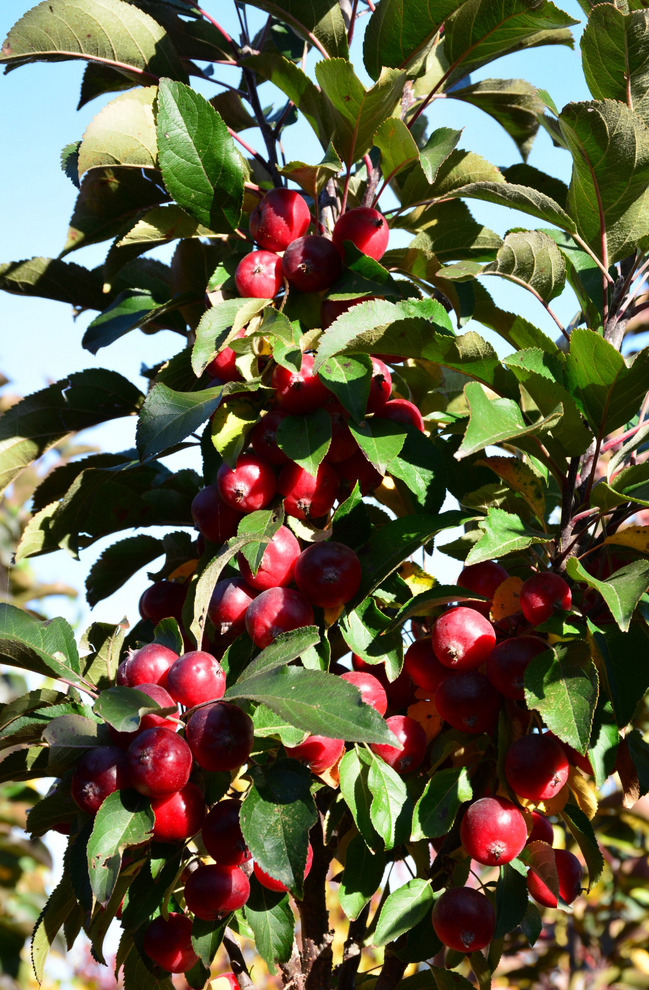
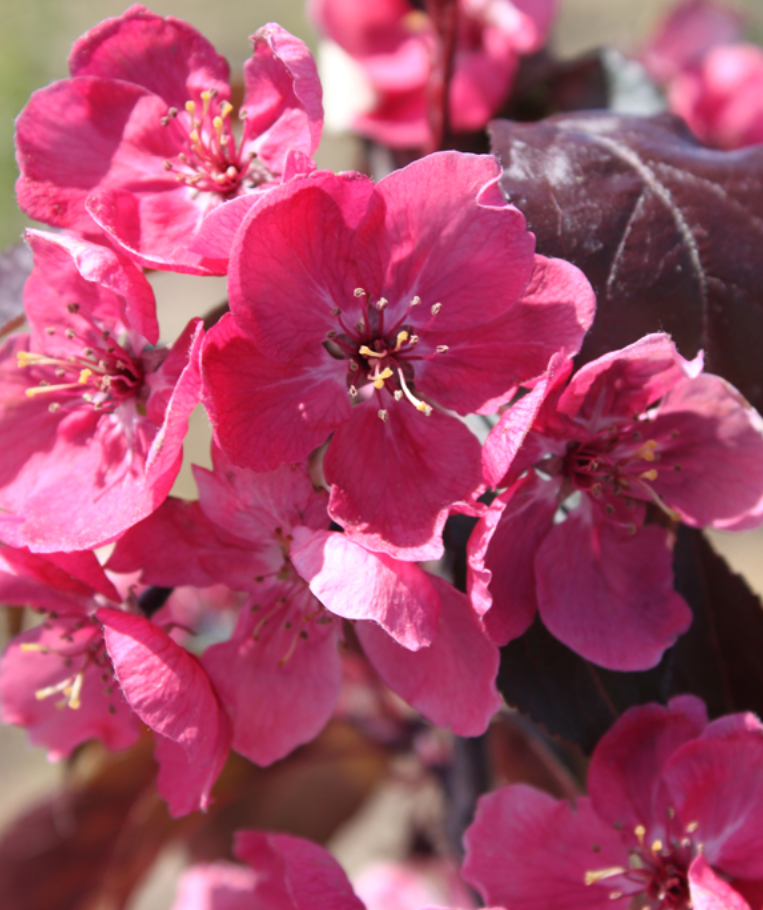
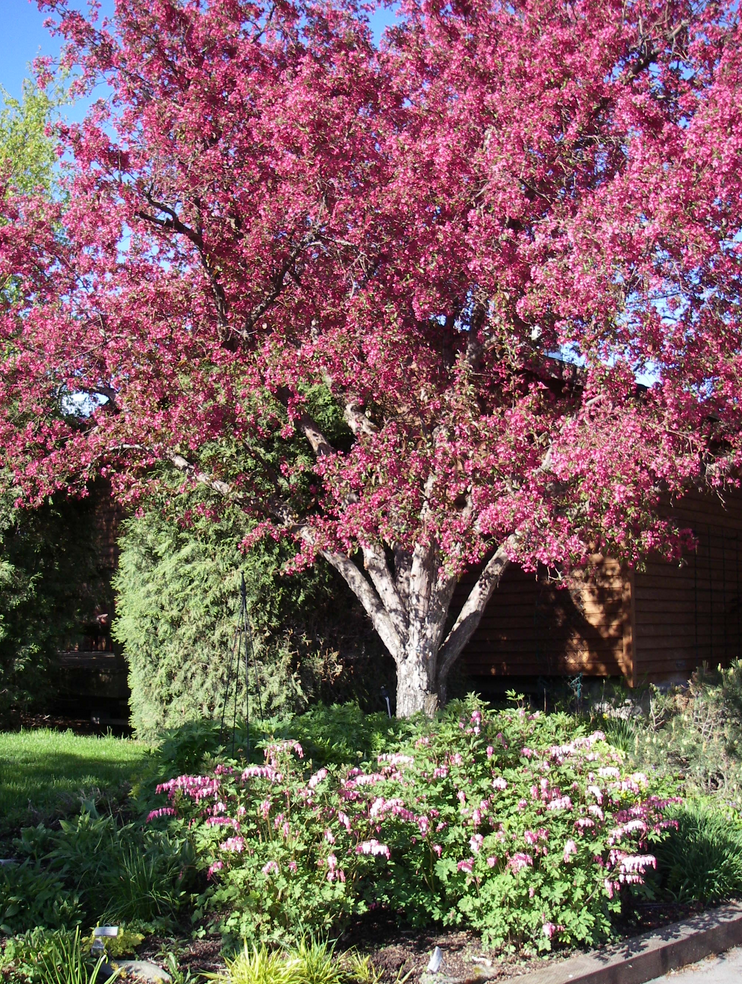
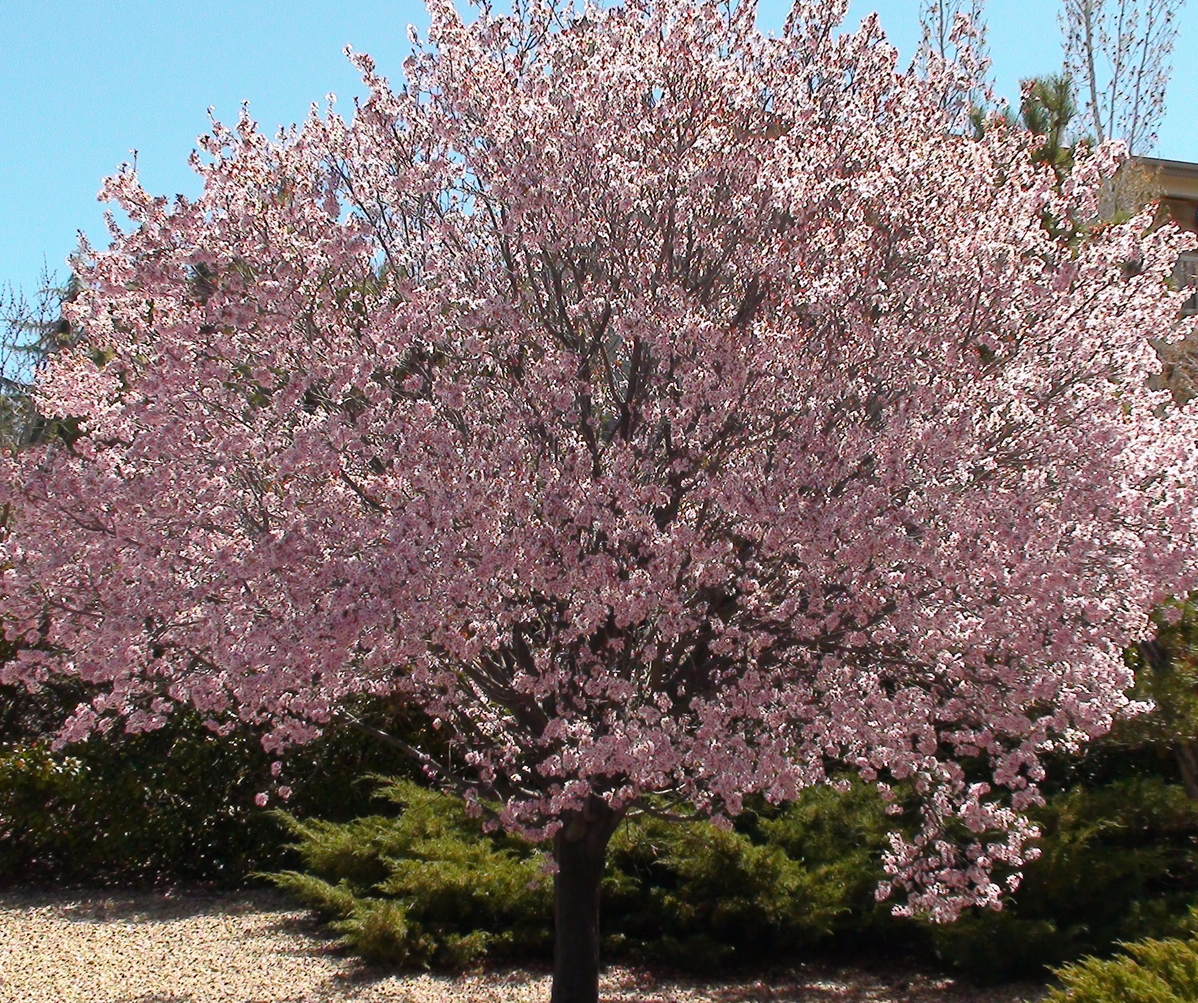
Beautiful! reddish-magenta blossoms cover an upright, spreading tree in spring followed by maroon, cone shaped fruit. Bark is glossy dark red. Excellent disease resistance. NOT A MESSY TREE! The berry-sized fruit hangs onto the tree throughout the winter providing a good food source for birds. Attractive, bright red berries are very showy in winter. Hardy to -30°F Maximum Elevation: 7,500 Feet
Round, Upright, Spreading
Showy Flowers, Grown For Attractive Foliage, Winter Interest, Attracts Birds
Avg Height and Spread 15-20 feet
pink in the spring followed by green foliage in the summer. Red fruit develops in the late
summer-fall and will stay on throughout the winter months. Fruits are edible, though tart, and
can be used to make jellies, jams, and ciders.
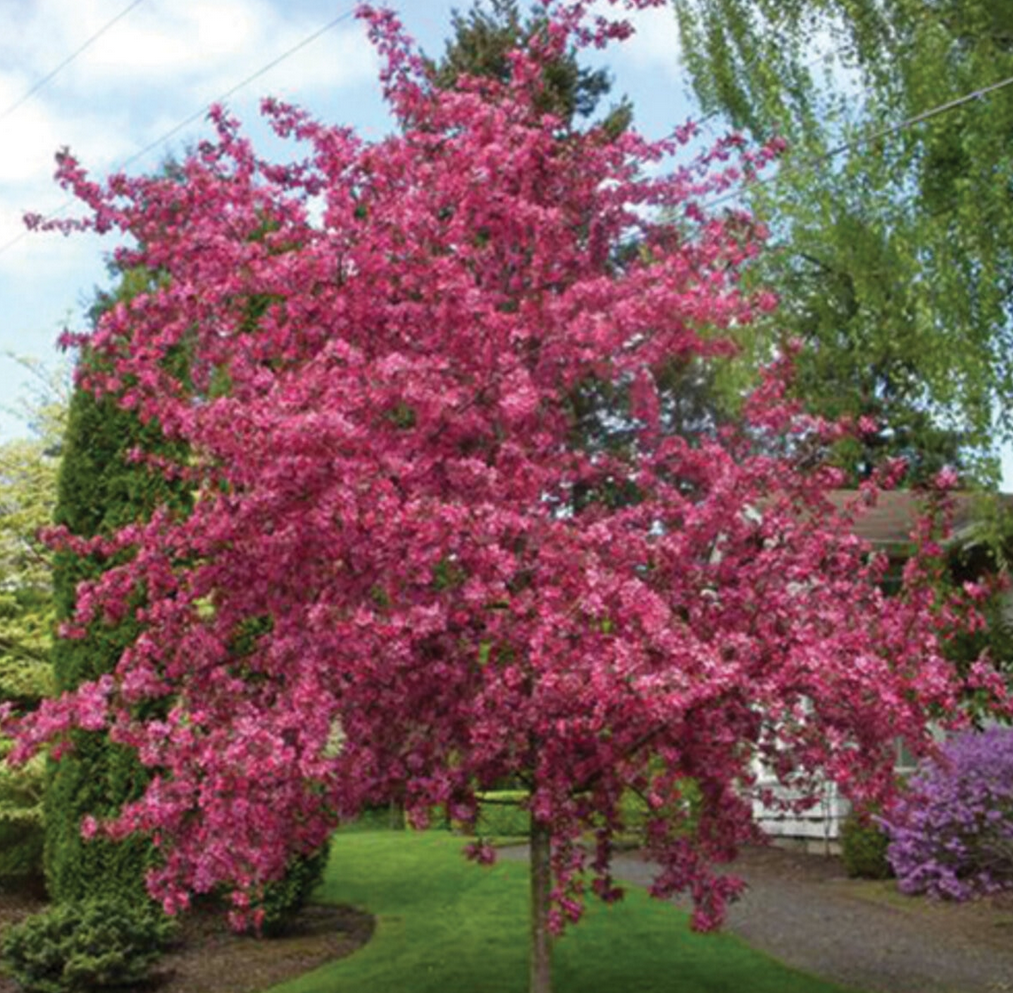
The Red Baron crabapple tree is a stunning addition to any landscape, with vibrant red blooms that light up your backyard in the spring. This tree is disease-resistant and low-maintenance, making it an easy choice for those who want a pop of color in their yard without the hassle. Whether you want to add curb appeal to your home or create a peaceful backyard retreat, the Red Baron crabapple tree is a must-have for any nature lover.
Bright pinkish red flowers combine with deep purple cutleaf foliage to present a unique new crab. Deeply lobed leaves and upright form with good branching and density are inherited from its Golden Raindrops parent. Growth is outstanding, and it displays good to excellent resistance to the common diseases.
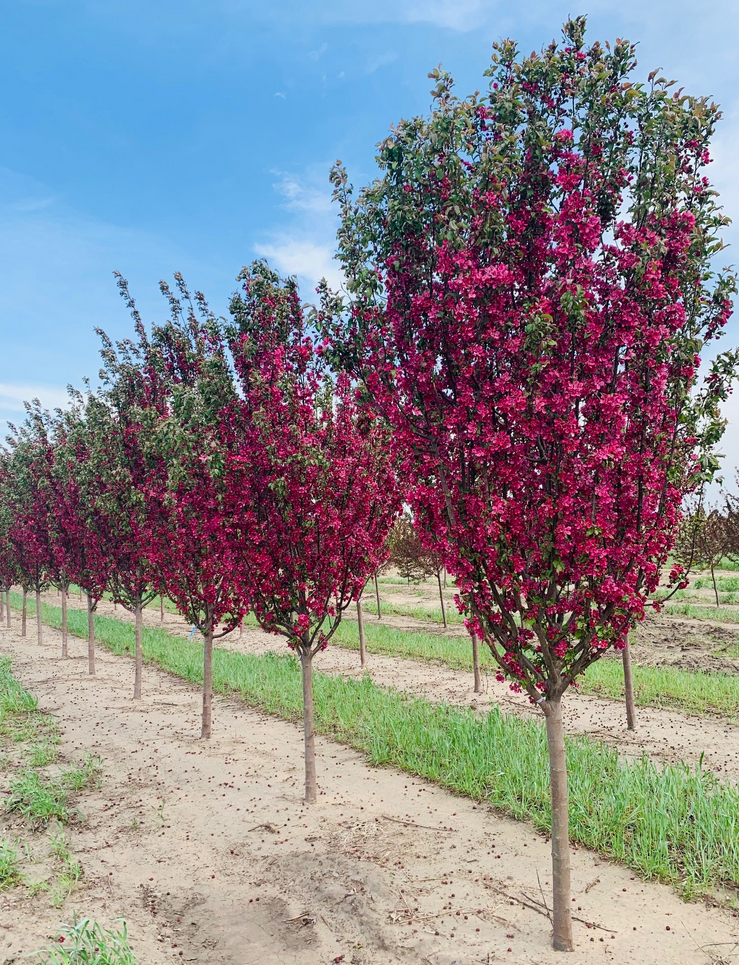
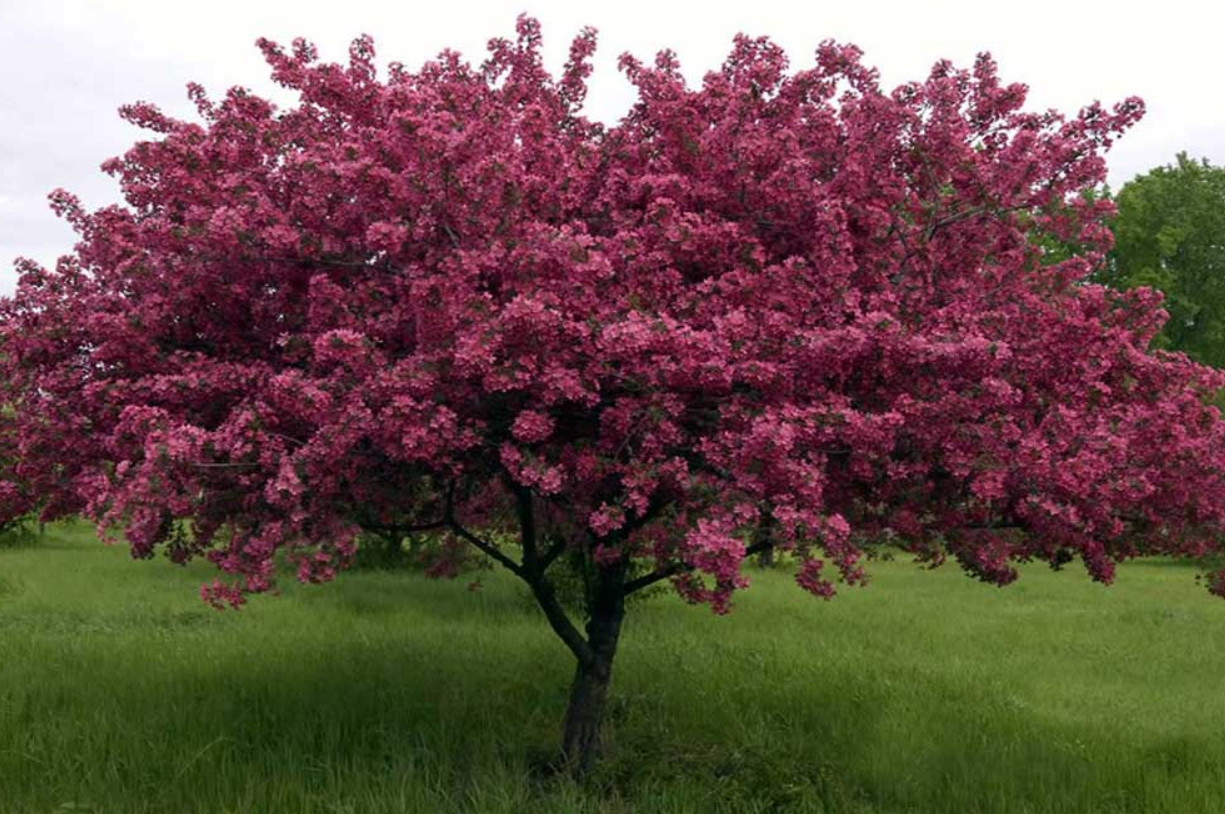
Thunderchild is a compact, upright deciduous tree known for its stunning dark pink flowers in spring and deep purple foliage throughout the summer. It typically grows to about 15-20 feet tall and is suitable for urban environments, thriving in full sun and well-drained soil.
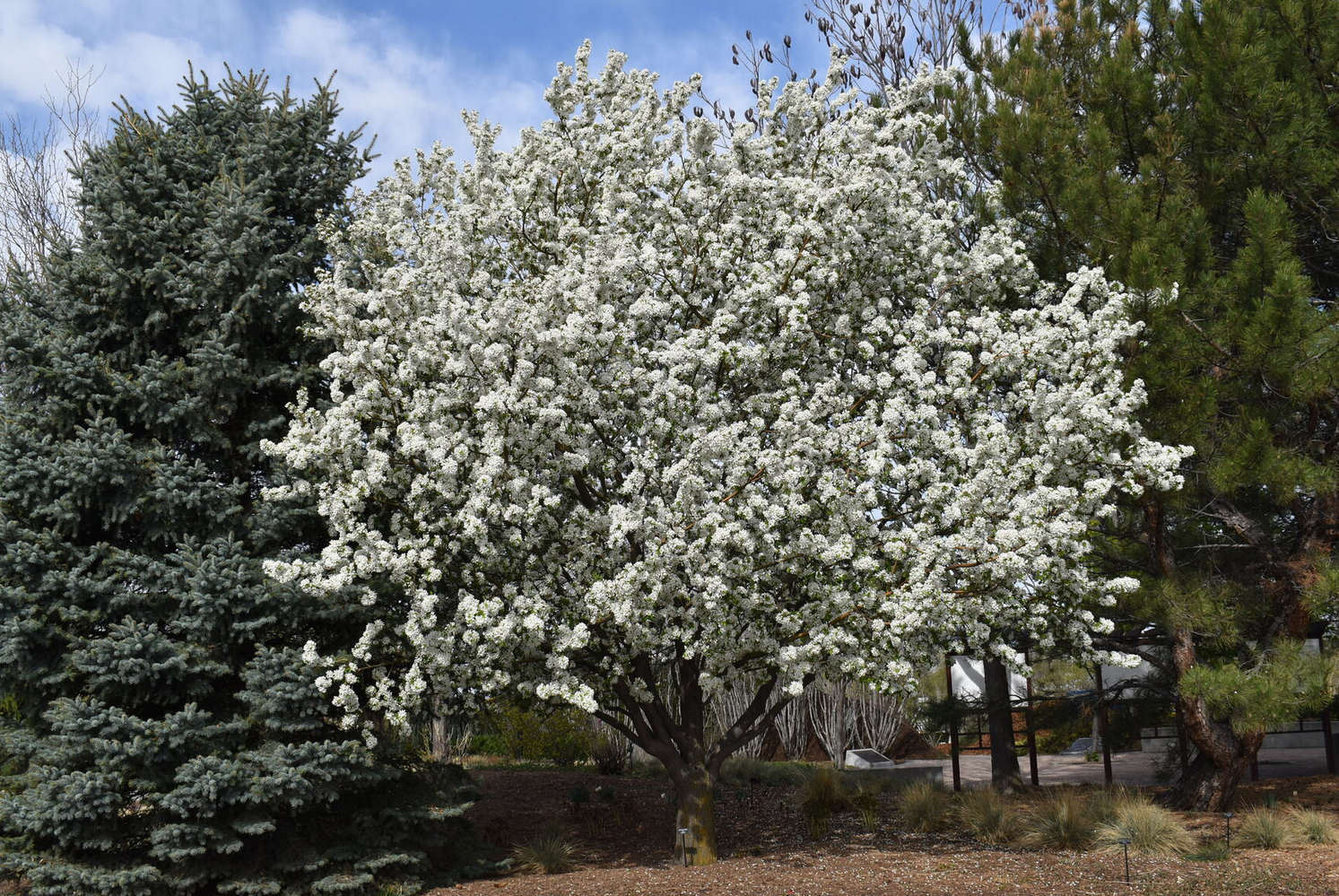
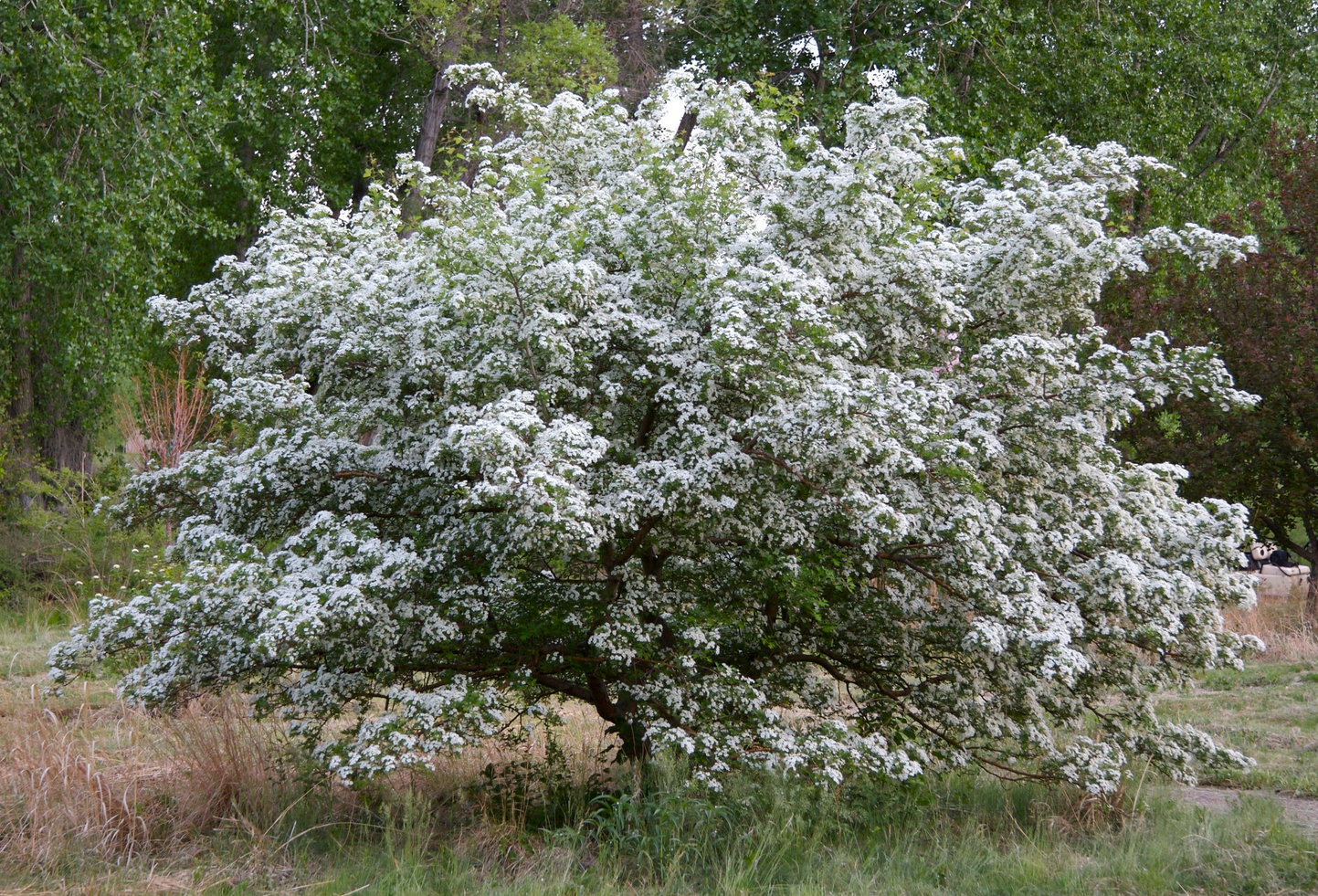
Russian hawthorn is a small, beautiful, drought-tolerant tree with interesting characteristics throughout the year.
In spring, after the small, glossy green leaves emerge, it explodes with numerous clusters of bright white flowers. By August, the flowers mature into vibrant red fruit. As the leaves turn yellow in fall, the fruit ages to a rusty red color.
Its upright branches have a gnarled and irregular branching habit, bearing 1/4 to 1/2 inch long thorns. Russian hawthorn's branching pattern and ridged bark create a pleasing structure in winter.
Russian hawthorn is a fantastic small tree for dry areas. Out of all the hawthorns, it has the brightest, glossiest red fruit.
Decidiuous Trees
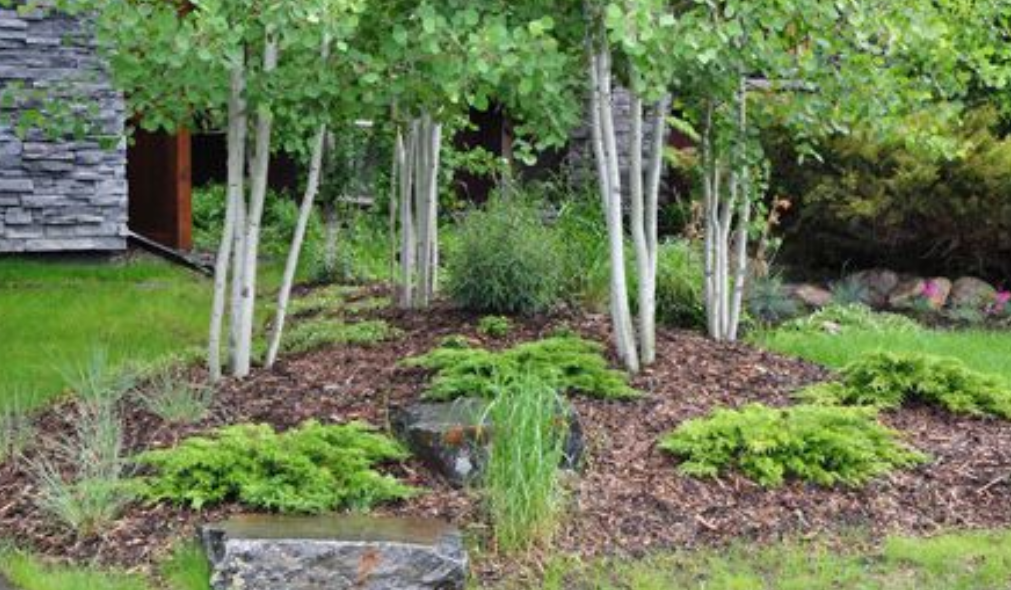
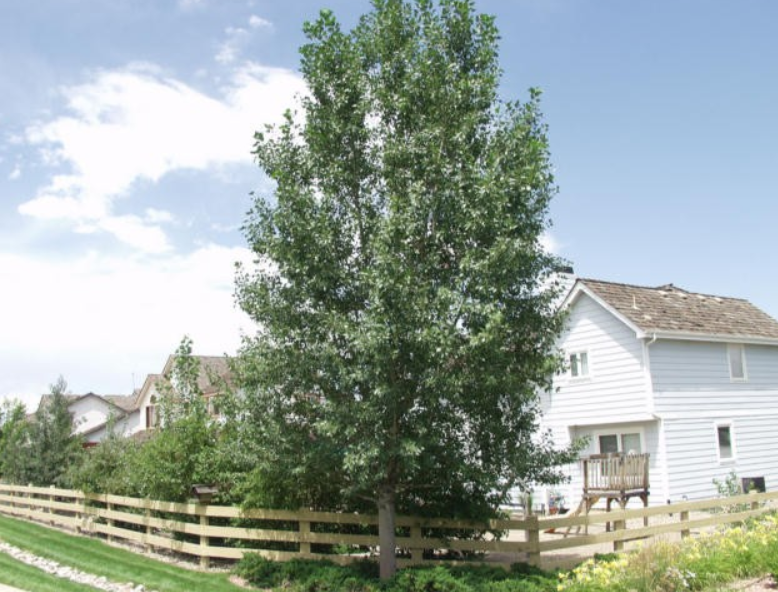
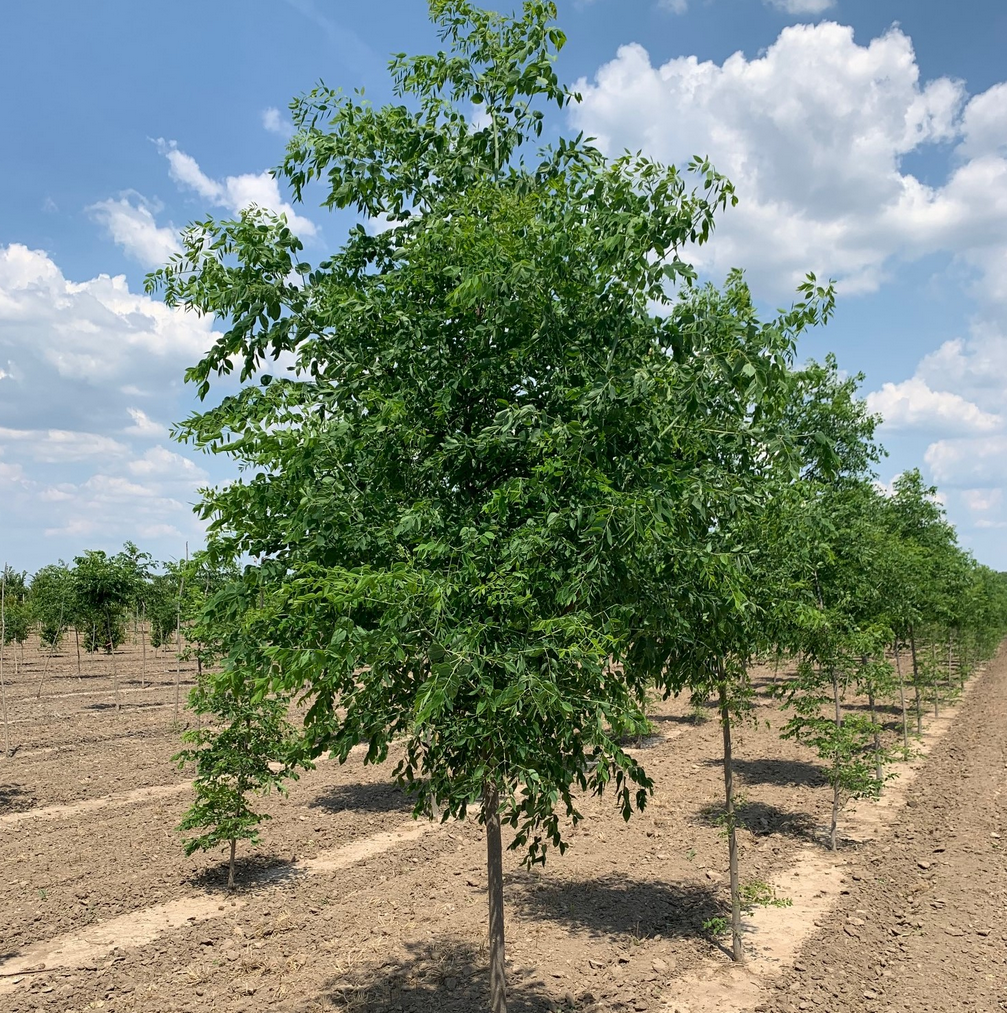
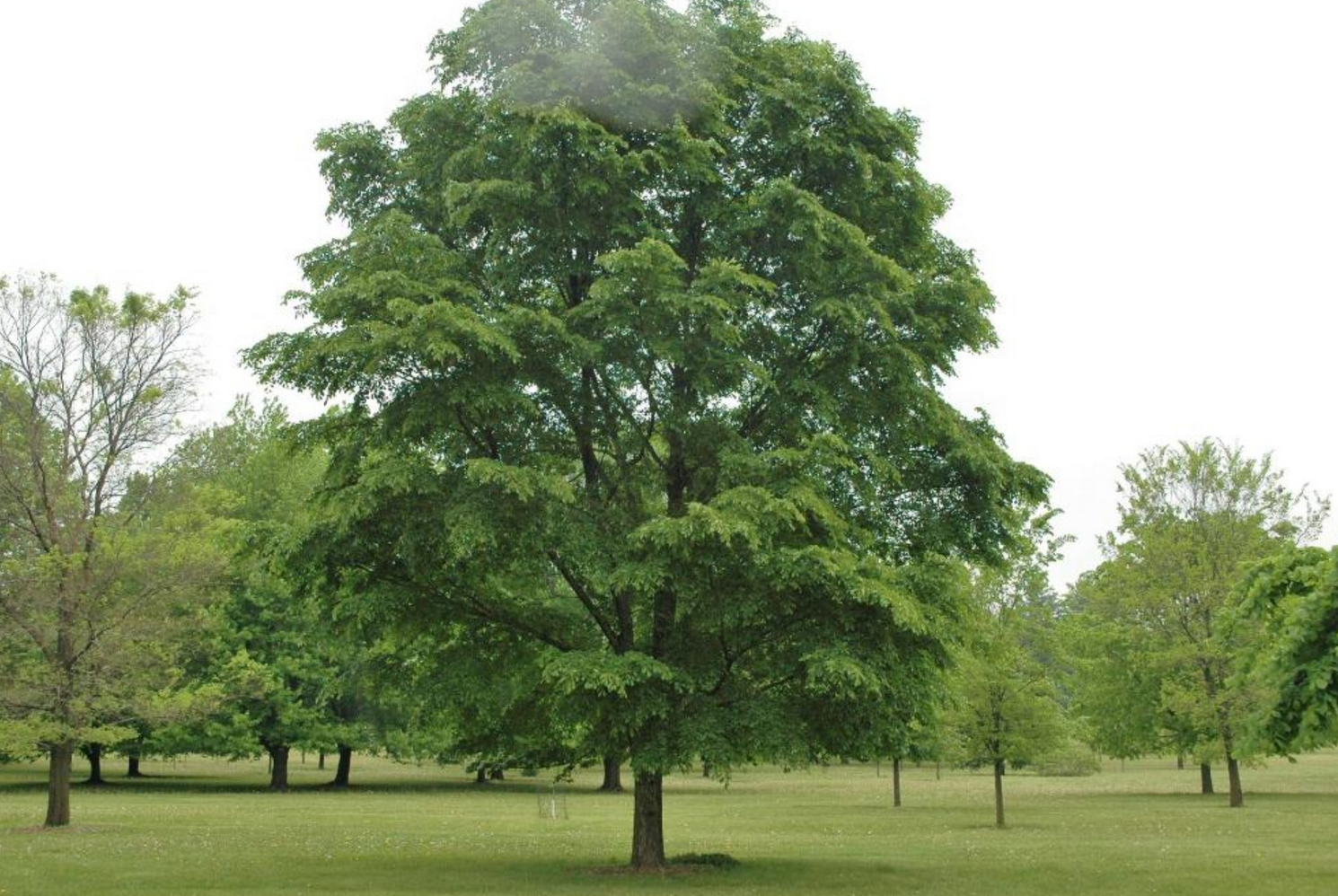
The Accolade Elm is a remarkable disease-resistant replacement for the American Elm, with a very similar vase-shaped form. It grows quickly into an attractive arching tree that will reach 30 feet tall within 20 years, and ultimately reach 60 feet tall, with a crown over 30 feet wide. Grow it as a handsome lawn specimen, or an avenue along a driveway or property line. If you miss the elm tree, this tree will bring it back, without the risk of it dying from the dreaded Dutch elm disease.
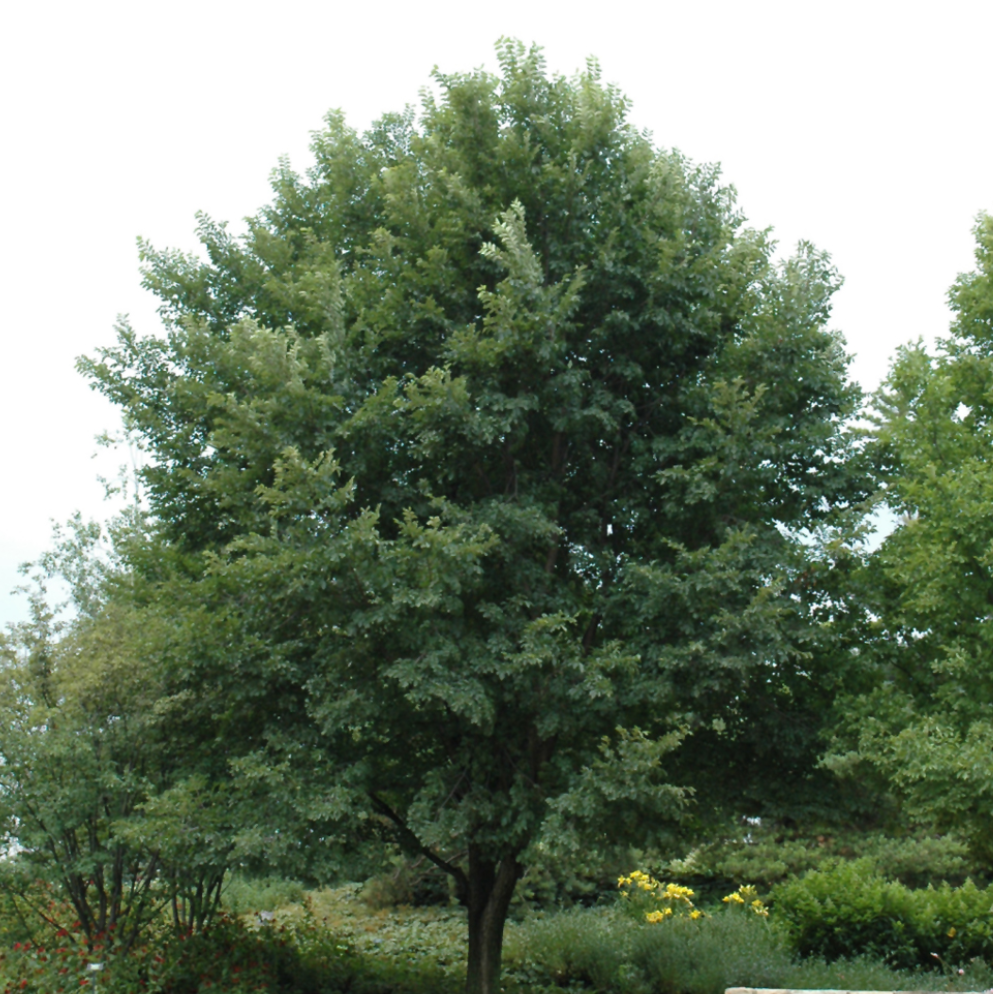
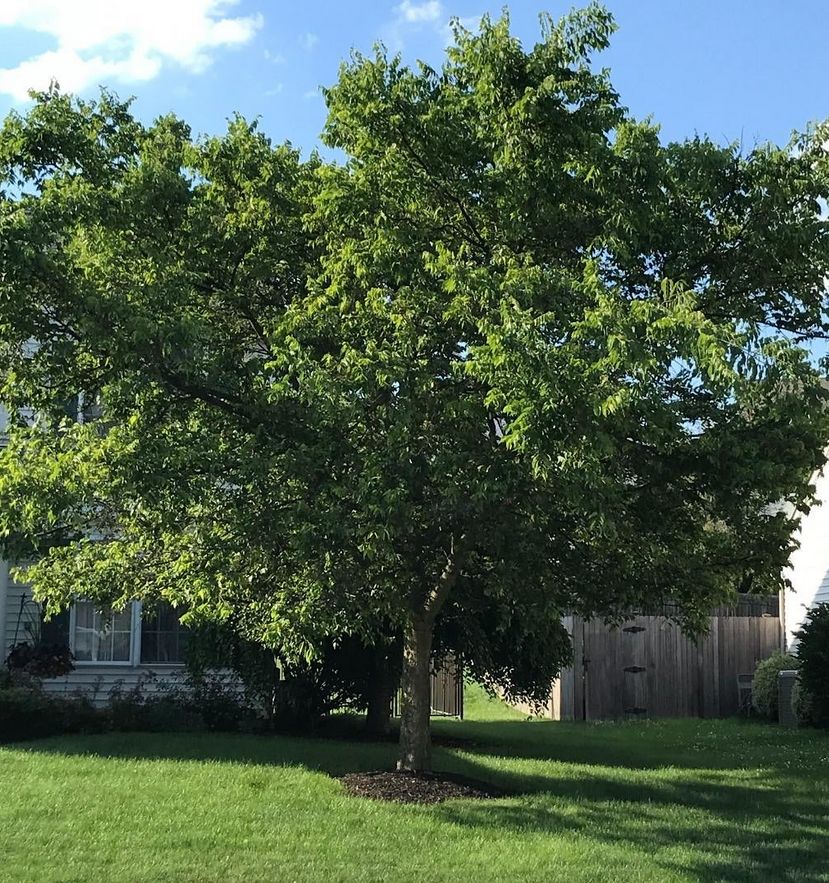
Hackberry (Celtis occidentalis), is a widespread small to medium-size tree, known also as common hackberry, sugarberry, nettletree, beaverwood, north ern hackberry, and American hackberry. On good bot tom-land soils it grows fast and may live to 20 years. The wood, heavy but soft, is of limited commercial importance. It is used in inexpensive furniture where a light-colored wood is desired. The cherrylike fruits often hang on the trees throughout the winter providing many birds with food.

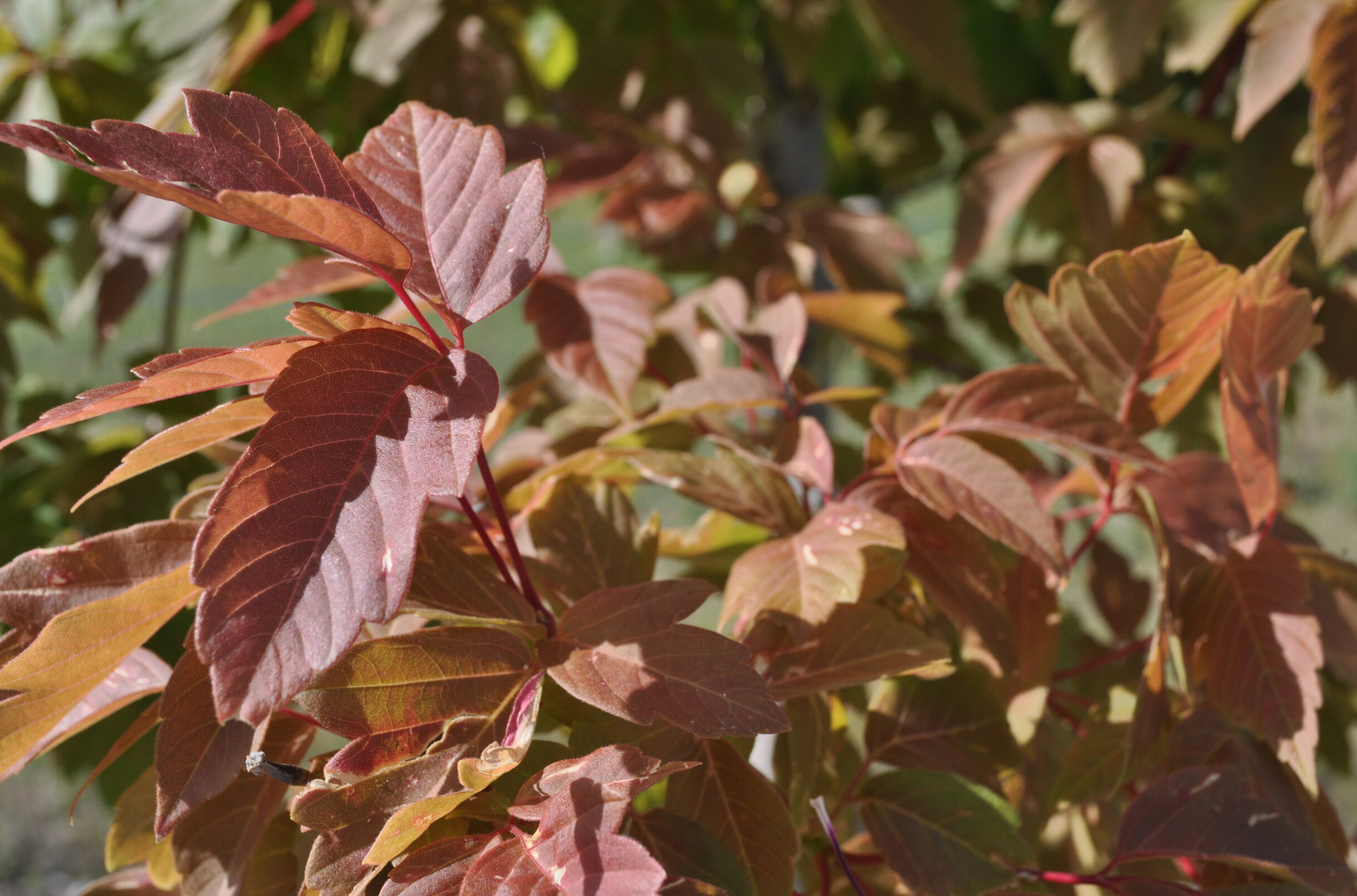
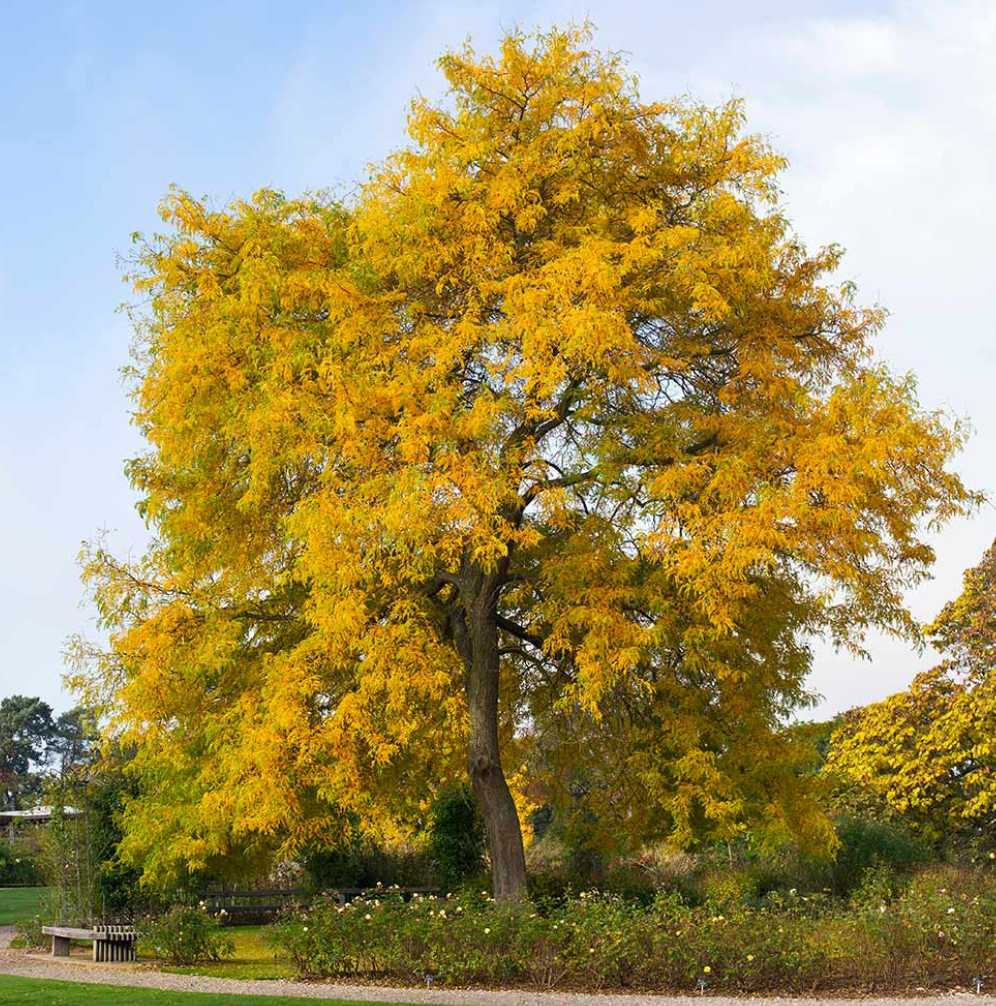
Like the name implies, Shademaster Honeylocust is a master of shade not too dense that your lawn thins from lack of light, but thick enough to cool the sun’s rays. Its dark, rich green foliage is striking as it emerges in the spring to form a rounded canopy ideal for average-sized yards. In some seasons, you can smell a soft fragrance from the tree’s not-so-showy flowers. In the fall the small, fern-like leaves turn golden yellow and are not an inconvenience as some other large-leafed trees can be.
Extra bonus with the Shademaster variety: it is pest and disease resistant as well as thornless—which is rare within the Honeylocust family.
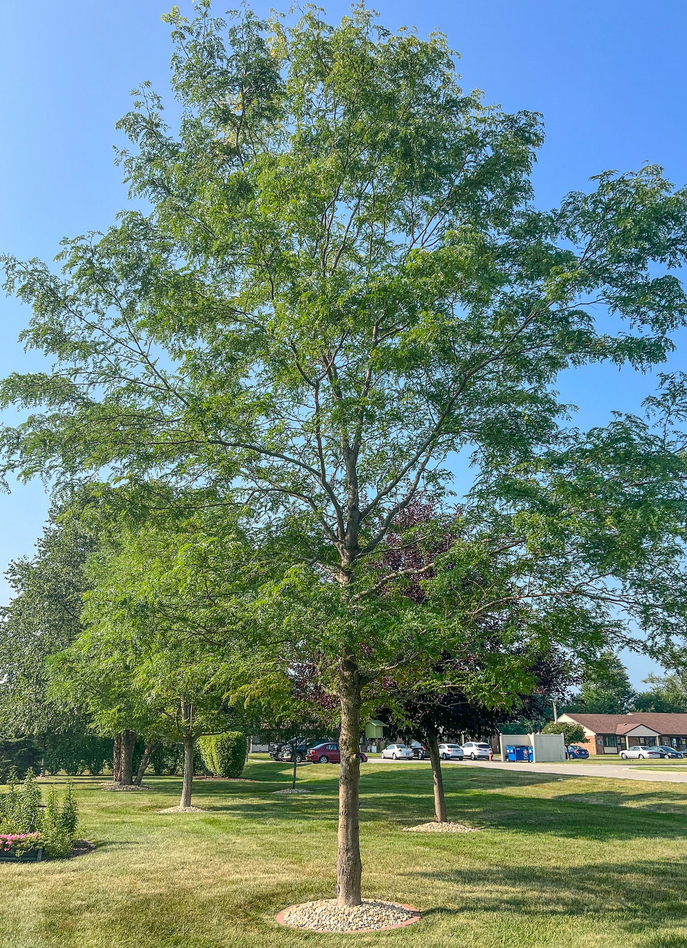
The thornless skyline honeylocust tree has captured the hearts of arborists, community foresters, and homeowners throughout America. And no wonder. This variety of honey locust tree is easy to plant, grows quickly, has reasonably strong branches, is aesthetically pleasing, and is tough enough to withstand just about any urban setting.
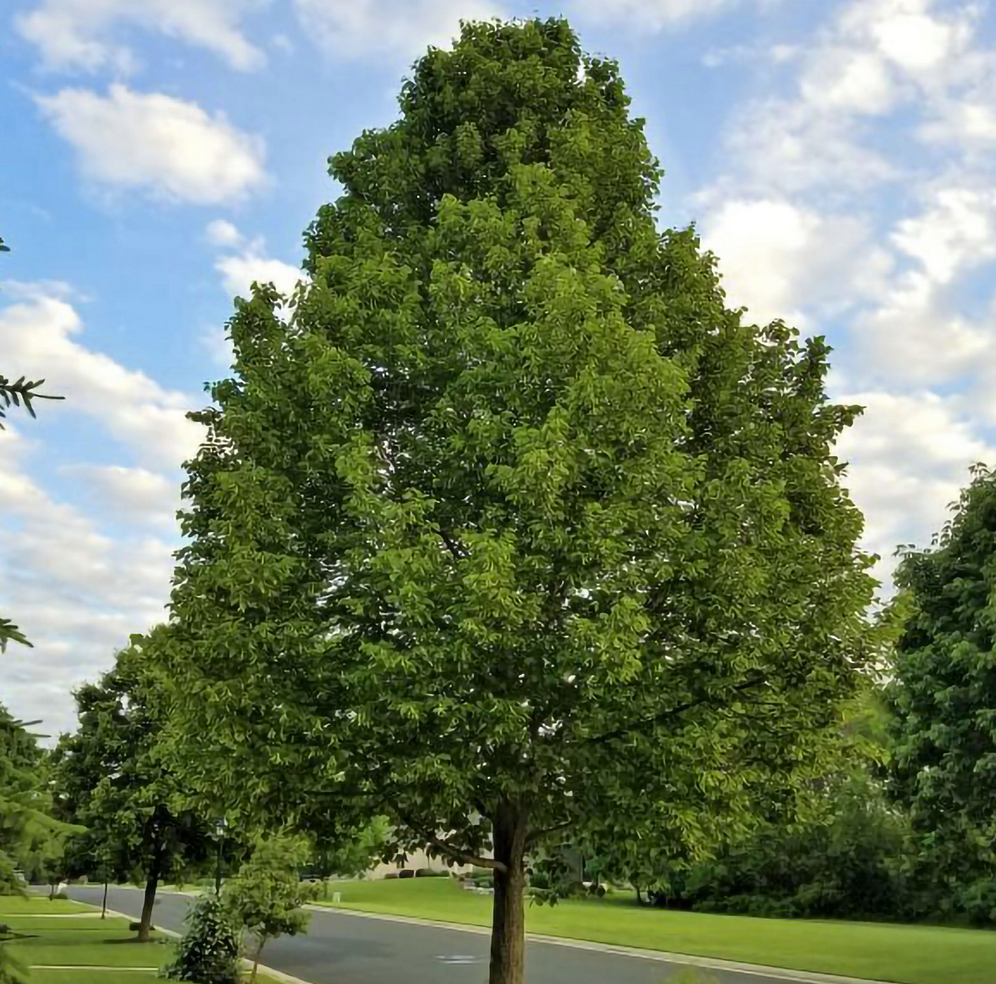
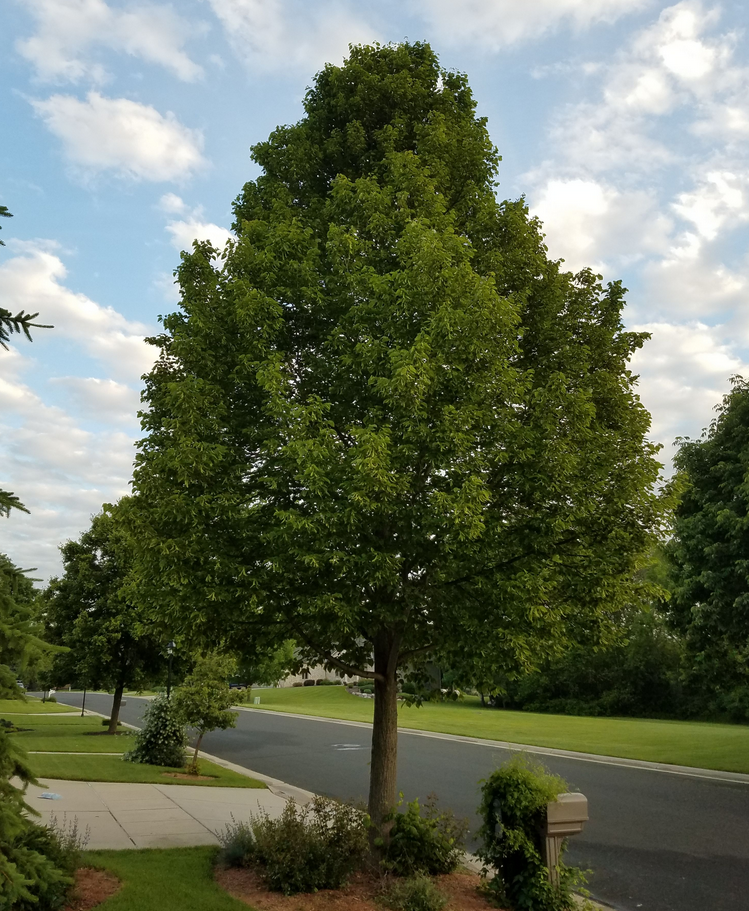
Skyline honeylocust trees have a distinctive pyramidal form, develop a strong, sturdy trunk, and is excellent for creating filtered shade in landscapes. Its beautiful yellow foliage adds color in the fall season.
Evergreen Trees
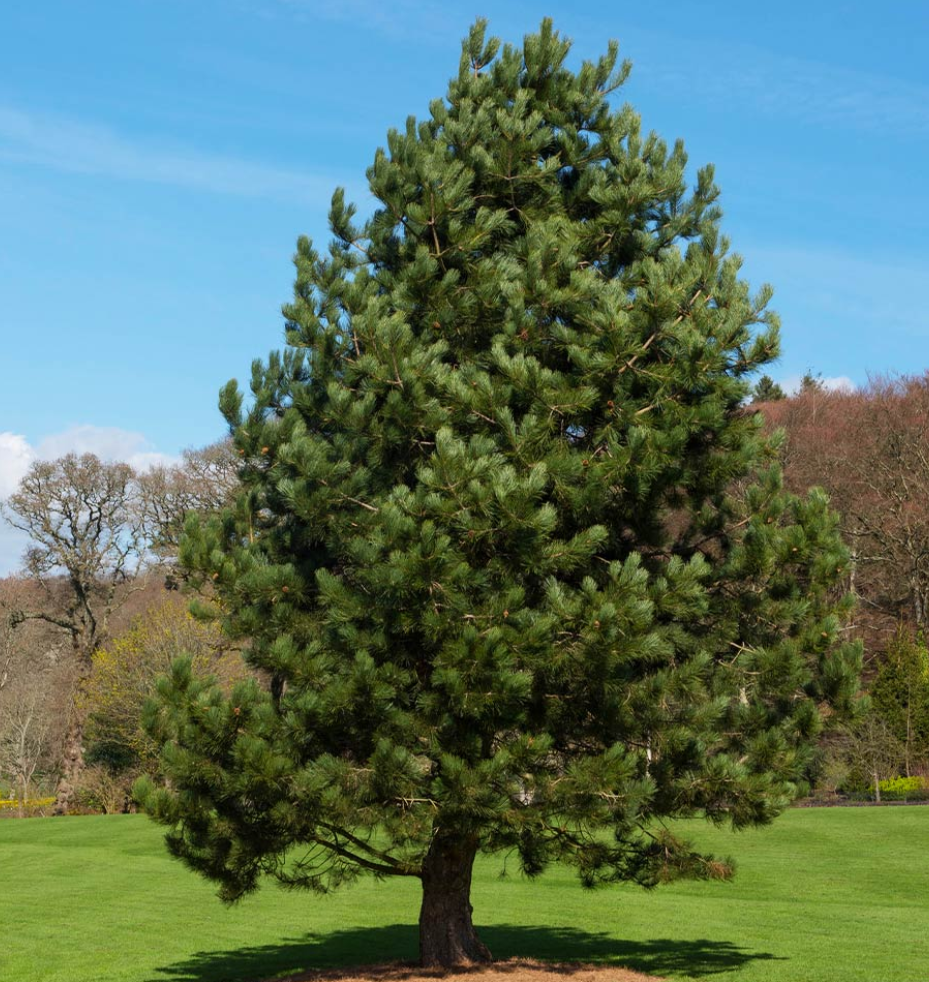
Austrian Pine has become a favorite ornamental pine. It is widely planted in our community landscapes and is almost as popular as the Colorado Blue Spruce. It adapts well to many types of soil conditions although it will not tolerate extremely wet or soggy soils, a condition that all pines and most conifers dislike. Austrian pine has a much fuller crown than its Colorado native, Ponderosa Pine. For that reason, it is planted as a "screen" to hide views or block wind. Its needle color is darker green and they are slightly smaller and stiffer than Ponderosa pine. Zones 3B to 7. Can survive up to Zone 8 but seldom seen. It prefers the colder climates. Pyramidal and full looking when young with lower branches maintained. Older tree becomes flat-topped and more open. Can reach 60' in height. In good conditions, grows 12-18" per year.
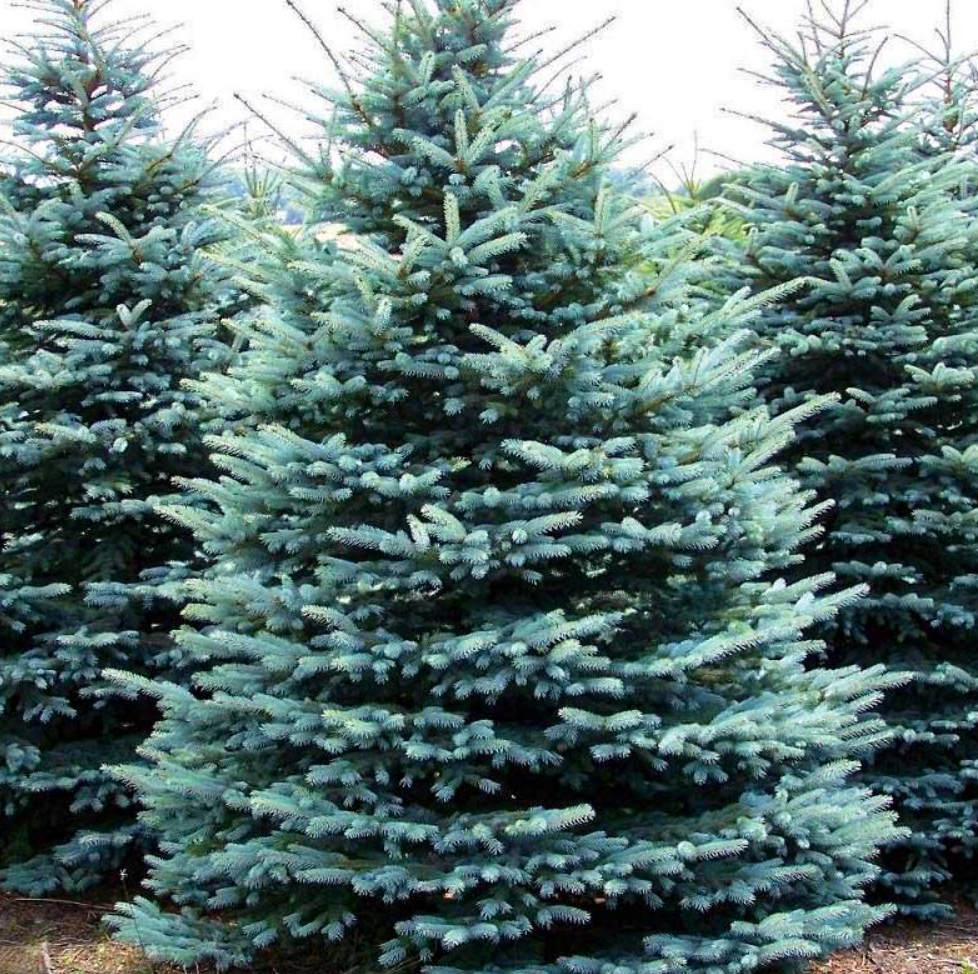
One of the most popular evergreens for our area. A stately evergreen tree valued for its classic pyramid shape. Stiff short needles range in color from silver-blue to green. Grows about 1 ft per year and tolerates a wide range of soil types. Performs best in a regularly irrigated area. Hardy to -40; F Maximum Elevation: 10,000 ft.
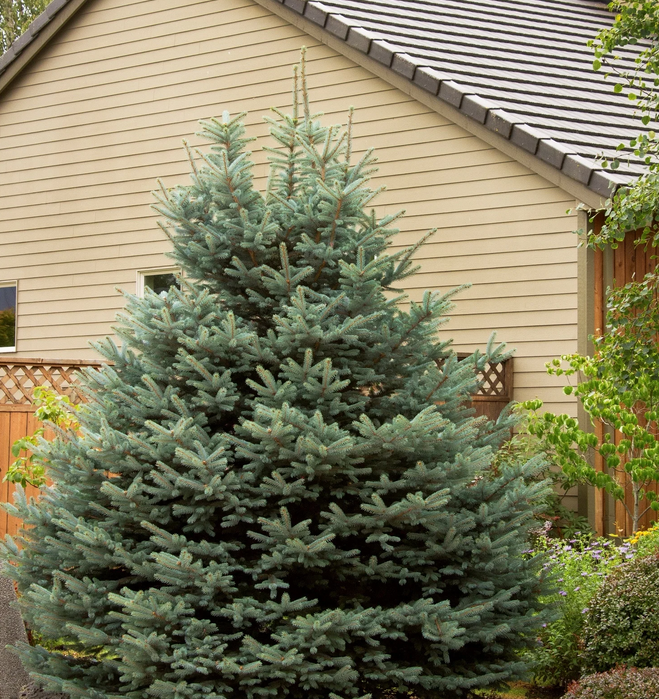
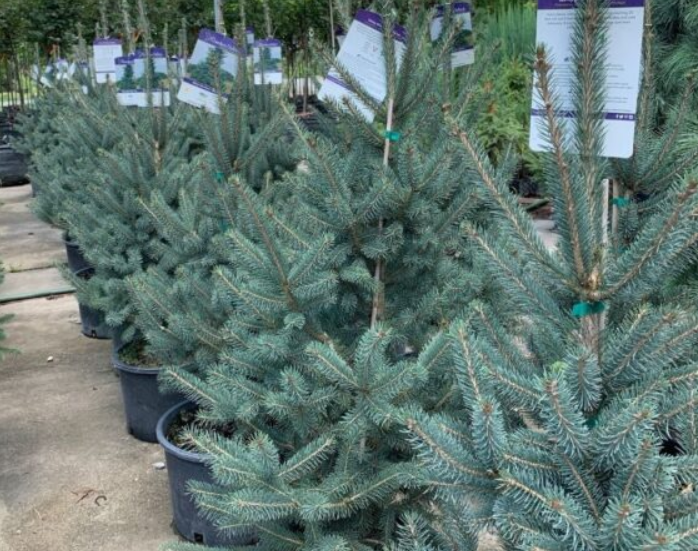
Picea glauca ‘Skinny Blue Genes’, also known as the Black Hills white spruce, is a distinctly narrow cultivar of the native white spruce species. With its rich blue foliage and tightly compact form, this exceptional variety provides year-round beauty and versatility in the home landscape.
Picea glauca is a coniferous evergreen tree native to the northern regions of North America. The species is known for its pyramidal form prickly needles and its ability to withstand cold climates.